What Does an IP68 Rating Protect Against?

On this page
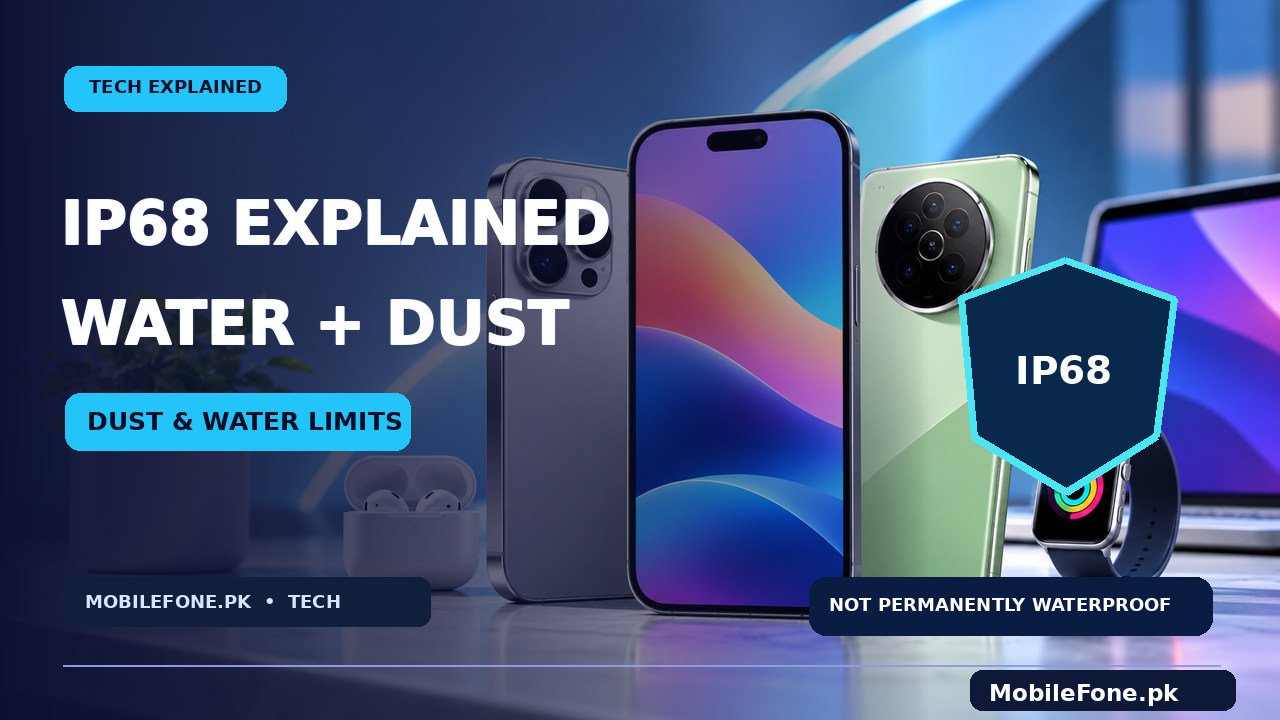
An IP68 rating means a device has been tested for dust-tight protection and a defined level of water immersion resistance. It does not make a smartphone permanently waterproof, suitable for underwater photography or safe against every liquid. The exact immersion depth and duration come from the manufacturer’s test conditions. If you are choosing an IP68 phone in Pakistan, check those conditions, how the device has been used and whether it has ever been repaired.
Decoding the IP68 letters and numbers
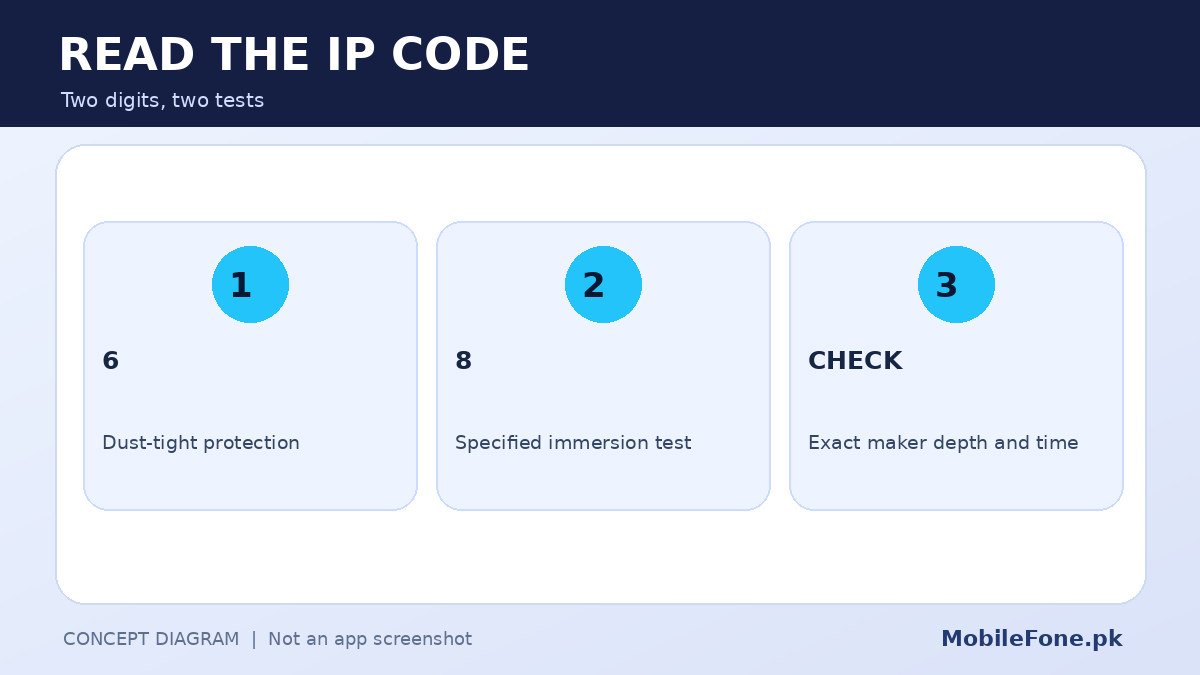
IP stands for ingress protection. The first digit relates to solid particles and contact with hazardous parts; the second digit relates to water. Under the IEC 60529 classification, a 6 in the first position denotes dust-tight protection, while 8 denotes resistance to continuous immersion under specified conditions. The standard defines a classification system, but a phone’s advertised depth and time must be checked in the actual product documents.
For example, Samsung Pakistan’s water-resistance guidance gives 1.5 metres of fresh water for up to 30 minutes for its stated IPX8 testing. Other phone manufacturers can claim different controlled conditions within their own product descriptions. Never assume that every IP68 badge means exactly the same depth.
| Rating | Meaning | Important limit |
|---|---|---|
| IP54 | Limited dust ingress plus splash protection | Not an immersion rating |
| IP67 | Dust-tight plus temporary immersion classification | Manufacturer conditions still apply |
| IP68 | Dust-tight plus specified continuous-immersion test | No guarantee for swimming or high-pressure water |
| IPX8 | Immersion test reported, dust digit unspecified | No dust-rating claim from ‘X’ alone |
Why rain is different from pools, soap and sea water
Water-resistance tests usually use controlled laboratory procedures, often with clean fresh water. Chlorinated swimming-pool water, seawater, soapy water, hot water and cleaning chemicals are different environments. They may damage seals, finishes or internal components. Water pressure from a strong jet or rapid movement can also differ greatly from a motionless immersion test.
Apple’s water- and dust-resistance information warns that resistance is not permanent and may decrease with ordinary wear; it also states that liquid damage is not covered under its warranty. Warranty rights can vary by jurisdiction, but an IP badge should never be understood as a blanket repair promise.
Water entering a speaker opening can temporarily make audio sound muffled. That symptom alone does not prove permanent damage, but it is not a reason to charge the phone immediately. Disconnect accessories, keep water away from the port and follow the specific manufacturer’s drying guidance. If a device becomes unusually hot, fails to power on or shows a swollen battery, stop using it and seek qualified help.
Everyday situations: what IP68 is and is not for
- Light rain or accidental splashes: an intact rated device is better protected than one without a comparable rating, within its documented limits.
- Dropping into clean fresh water: an immersion-rated phone may withstand the relevant test-like exposure, but there is no guaranteed rescue.
- Swimming or taking underwater videos: do not assume these are safe or covered.
- Hot showers and steam: avoid them; heat, steam and soap are outside ordinary immersion assumptions.
- Dropping or repairing the handset: impact and disassembly may compromise seals.
When shopping through MobileFone’s model directory, look beyond the quick IP line to the official device manual. A used IP68 phone that has been opened for a screen replacement may not retain the original resistance, even if its exterior looks undamaged.
What to do after a phone gets wet
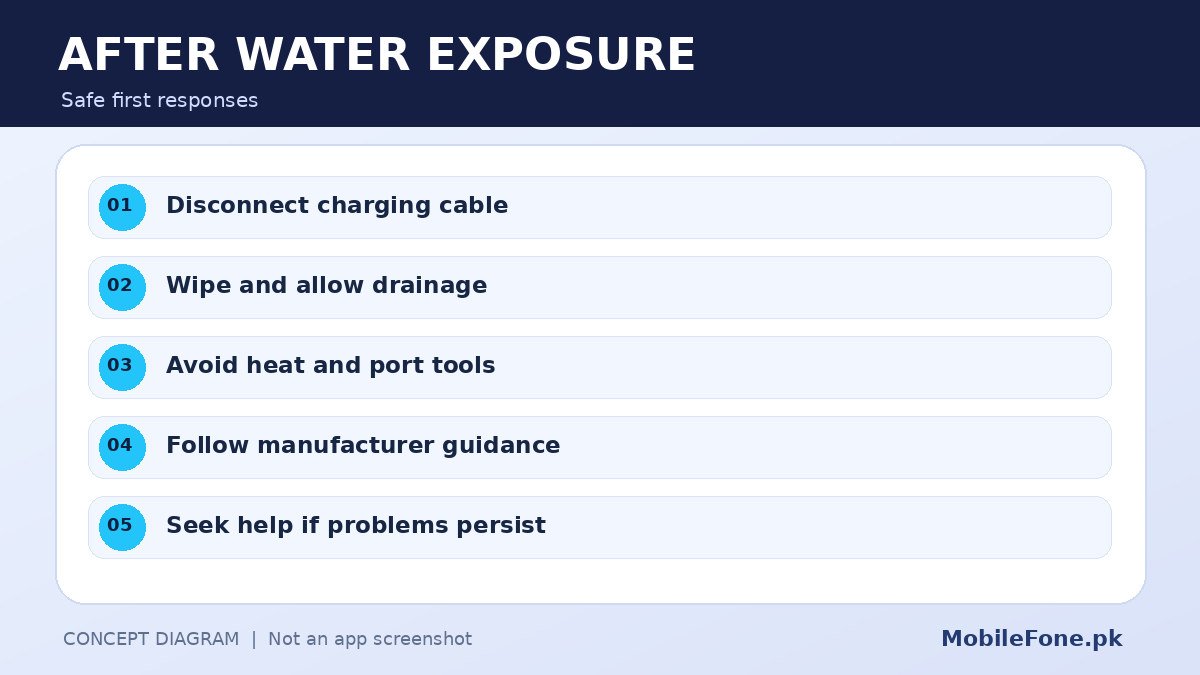
- Remove it from the liquid as soon as possible and disconnect any cable or charger.
- Turn it off if recommended by the device maker or if it behaves abnormally.
- Wipe the outside with a clean, soft, lint-free cloth.
- Hold the charging port downward and let moisture drain naturally without poking inside.
- Leave it to dry in a ventilated place according to manufacturer instructions; do not use heat or insert it into rice.
- Do not charge until the relevant charging-port moisture warning is gone and the handset is dry; seek repair if symptoms persist.
These are general low-risk precautions, not a substitute for model-specific support advice. Samsung’s Galaxy guidance and Apple’s iPhone instructions differ in details about cleaning after exposure. Follow the guidance for the actual phone; do not improvise with sharp tools, compressed air or forced heating.
Does IP68 matter more than a protective case?
They address different risks. An IP rating concerns tested resistance to particles and liquid ingress. A case primarily helps with grip and some kinds of impact, depending on its design. A case does not create an official immersion rating, and water ingress protection does not promise drop protection. Some cases can trap grit or moisture against the body, so inspect and clean them regularly.
A budget buyer in Pakistan may be choosing between a better display, a bigger battery and water resistance. Think about actual use: heavy rain, dusty travel and accidental spills may make an IP-rated design valuable. But the money spent on a rating should not replace basic device care or backups. If comparing several price segments, recent model listings can provide leads, after which you should read official durability notes for each model.
The practical answer: IP68 is a useful layer of protection against accidents, not permission to use a phone underwater. Treat every seal as something that can age, and check the manufacturer’s conditions before exposing an expensive handset to avoidable risk.